
Key features of the system:
-
mechanical ventilation using a fan
-
smoke extraction via a smoke vent in the ceiling
-
Maintaining a constant airflow through the damper regardless of whether the door is open or closed; controlling fan speed via an inverter (certified control cabinets)
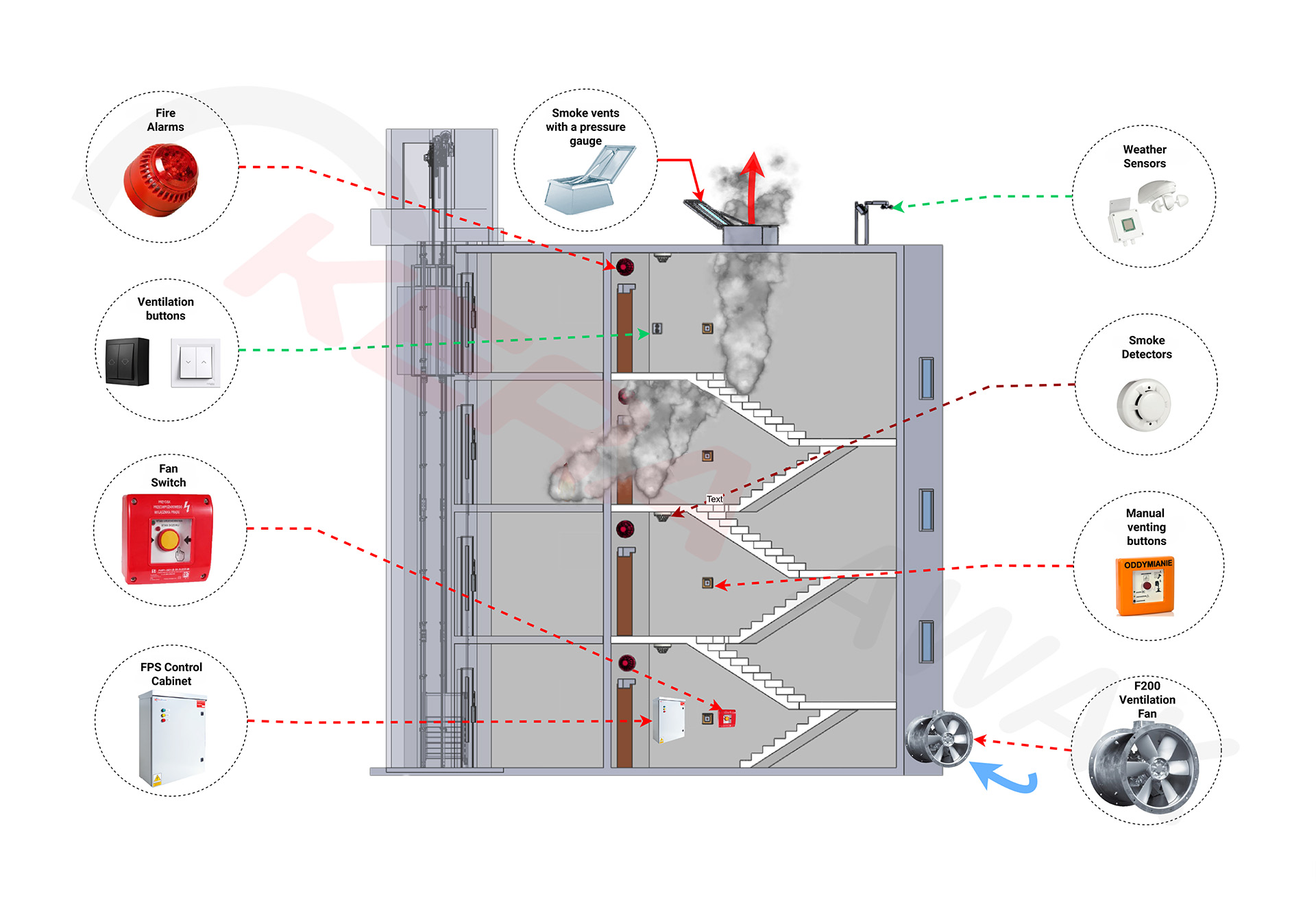
Placement of Components in a Mechanical Smoke Exhaust System
Klasyfikacja dotycząca oddymiania budynków ze względu na wysokość:
-
niskie - do 12 m do 4 kondygnacji – najczęściej stosowany jest system grawitacyjne oddymianie (czujki, certyfikowana centralka sterująca, klapa dymowa)
-
średnio wysokie - 12 / 25 m do 9 kondygnacji – najczęściej stosowany jest system mechanicznego oddymiania (wentylator w klasie F200, certyfikowana centralka sterująca, klapa dymowa)
-
wysokie - 25 / 55 m do 18 kondygnacji – stosowane są dwa systemy czyli mechaniczne oddymianie (wentylator w klasie F200, certyfikowana centralka sterująca, klapa dymowa) oraz system zapobiegania zadymieniu (certyfikowany system różnicowania ciśnień)
-
wysokościowe - od 55 m – stosowany jest system zapobiegania zadymieniu (certyfikowany system różnicowania ciśnień)
Rodzaje budynków:
-
budynki użyteczności publicznej
budynki handlowo usługowe
budynki wielorodzinne
hale magazynowe oraz produkcyjne
centra logistyczne
W momencie wykrycia pożaru otwiera się klapa i uruchamiany jest wentylator nawiewny. Stosujemy przetwornik różnicy ciśnień lub listwę pomiarową aby płynnie regulować obrotami wentylatora (np. przy otwarciu drzwi). W ten sposób unikamy spadku przepływu powietrza na klapie dymowej. Należy pamiętać, że zbyt mała prędkość wypływu wydłuża czas usuwania dymu, natomiast za duża prędkość powoduje turbulencje pod stropem i wpływa niekorzystnie na skuteczność działania systemu
-
stacja pogodowa
przycisk przewietrzania
przycisk oddymiania
sygnalizator optyczno akustyczny
czujka dymu
sygnalizatory
przetwornik różnicy ciśnień lub listwa pomiarowa montowana w klapie dymowej
Dla obiektów przemysłowych, użyteczności publicznej proponujemy wentylatory oddymiające (klasa F400) w izolowanej obudowie z klapą dymową.
Certificate of Consistency of Performance Characteristics
Active smoke exhaust areas of awak smoke dampers - Type P
Active smoke exhaust areas of awak smoke dampers - Type P
Active smoke exhaust areas of awak smoke dampers - Type P
Active smoke exhaust areas of awak smoke dampers - Type P
Technical and Operational Documentation
DTR Single-leaf Pneumatic Damper with PC AWAK P and S
DTR Single-leaf Pneumatic Damper with PC AWAK P and S
DTR Single-leaf Pneumatic Damper with PC AWAK P and S